
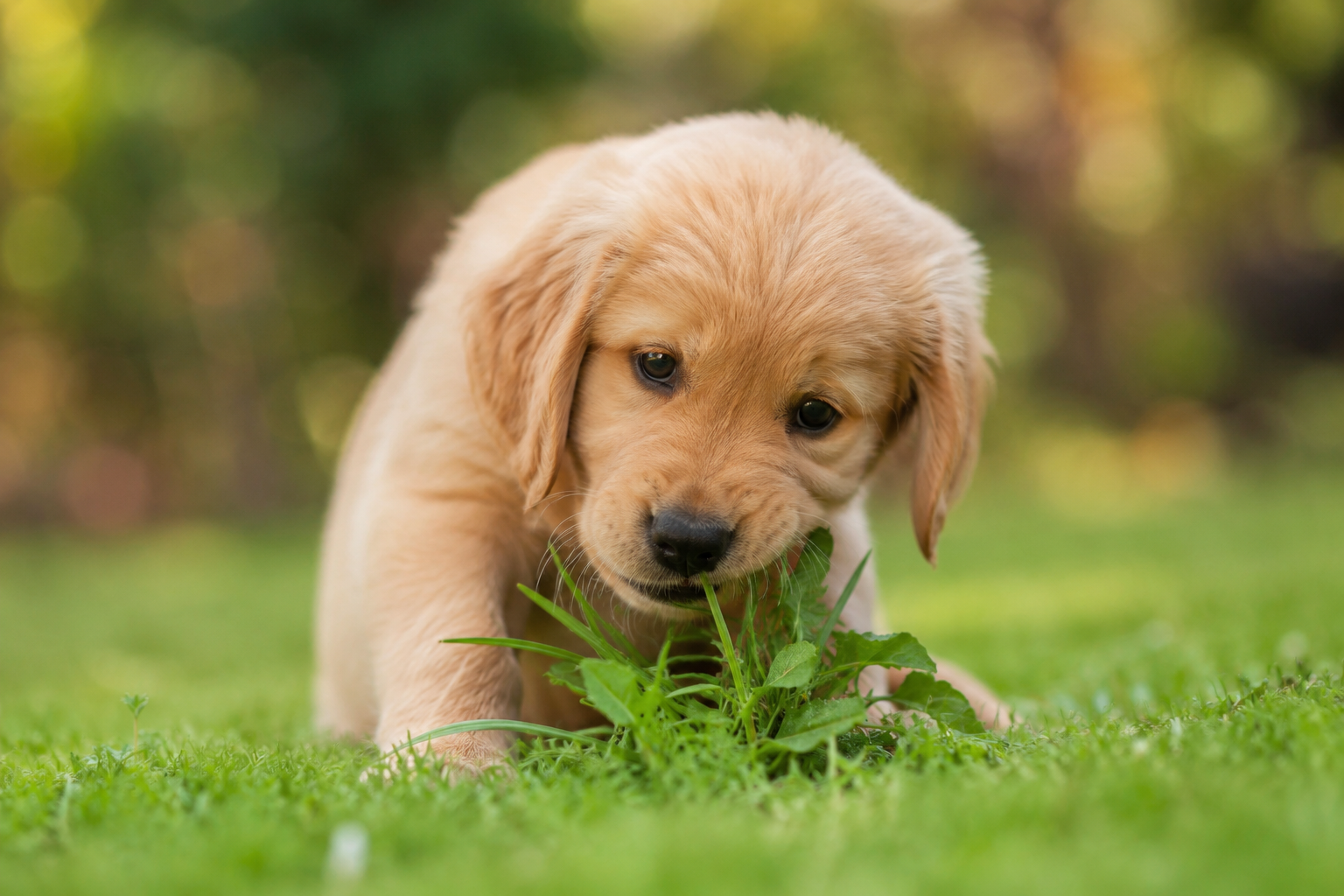
I was taking my dog for a park walk when I discovered an unforeseen occurrence during a morning stroll. The dog stopped his movement at a patch of green grass which looked fresh before he began to eat the grass. I believed he was just fooling around until I suddenly experienced a rush of multiple questions that flooded my mind.
Dogs eat grass for what reason? Do these behaviors show that dogs have become sick?What secret reason exists which most dog owners remain unaware of?
I started my research to find answers about veterinary care and scientific research about this subject. The information I found exceeded all my previous expectations. This article explains the reasons dogs consume grass while showing which behaviors in dogs who eat grass should not concern owners and which situations need medical intervention for dogs.
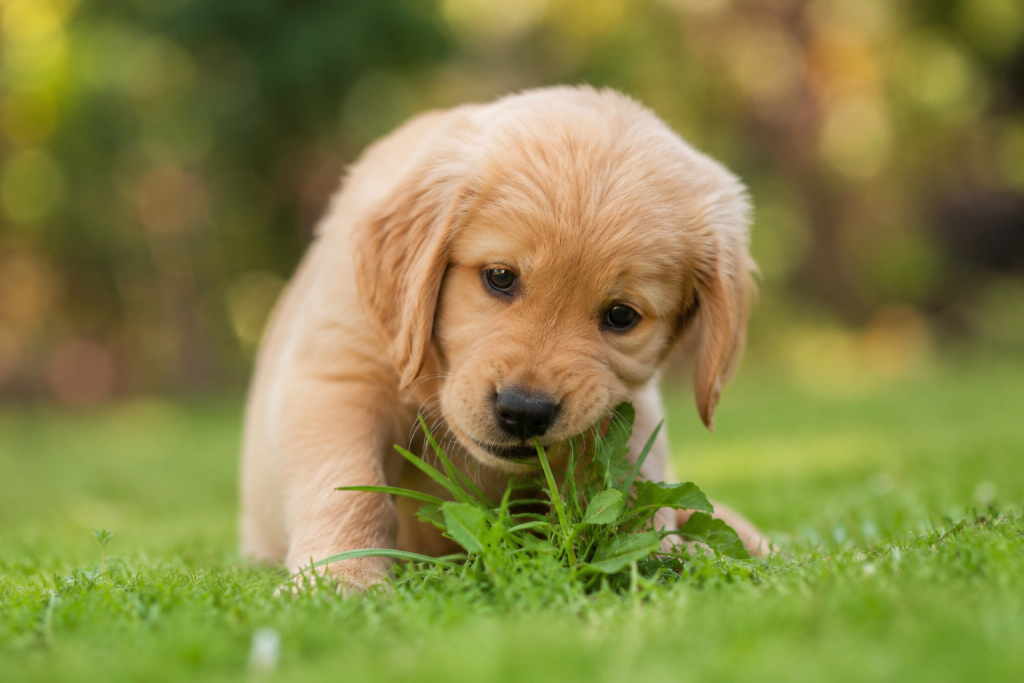
Common Reasons Dogs Eat Grass
The American Kennel Club (AKC) Chief Veterinary Officer Dr. Jerry Klein explains that dogs consume grass for multiple reasons which mostly represent normal canine actions instead of medical symptoms.
Instinctive Behavior
People have observed dogs eating grass since ancient times. Dogs’ wild ancestors including wolves used to consume herbivore stomach contents which contained both animal and plant components. Because of their evolutionary background dogs maintain an inherited tendency to eat grass which appears even when they have proper health and receive suitable nourishment. The actions people perform in this situation show their typical behavior which does not indicate any medical issues.
To Support Digestion
Some veterinarians believe that grass may provide a small amount of fiber, which can help support healthy digestion and regular bowel movements. Dogs do not require grass in their nutritional balance yet some of them choose to eat it because it improves their digestive process through their food.
An Upset Stomach
Dogs eat grass when their stomachs become upset and when they feel nauseous. The act of eating grass produces vomiting which helps empty the stomach from its contents that create pain in particular cases. Research shows that dogs tend to avoid vomiting after they consume grass so their behavior must have different reasons than this particular explanation.
Boredom or Lack of Mental Stimulation
They which stay by themselves for long hours without proper physical activity and mental stimulation will develop grass-eating habits because they want to find something to occupy their time. Dogs who chew grass do so to spend their time and to explore their environment. Dogs require their owners to take them for walks and play with them while providing interactive toys which help decrease this particular behavior.
They Simply Like the Taste
They tend to enjoy fresh grass during springtime because they find its soft texture and fresh growth particularly appealing. Dogs enjoy certain food items together with treats but they also find pleasure in eating fresh grass which does not harm their health.
Nutritional Deficiency (Less Common)
The scientific research which veterinarians conduct about animal behavior fails to find any evidence that dogs eat grass because they need extra nutrients during times when they show no signs of illness. Dogs develop pica which causes them to eat grass excessively in unusual circumstances when they start eating things that are not meant to be food. The animal needs to see a veterinarian when it shows this behavior too often or when it becomes too intense.
When Is Eating Grass Normal, and When Should You Be Concerned?
When Is Eating Grass Normal?
Dogs consume grass through their natural instinct which they follow when their body shows no sickness and their physical condition stays active. Dr. Jerry Klein who serves as Chief Veterinary Officer at the American Kennel Club (AKC) explains that dogs will eat grass at times without any resulting health issues. People consume fresh grass because they enjoy its flavor while their bodies develop natural instincts to eat it.
Your dog shows good health when it eats grass because it maintains its regular eating habits and physical movement without developing any unusual health symptoms such as vomiting. Your veterinarian needs to examine your pet when its behavior starts to occur regularly while you notice your animal developing health problems.
When Should You Be Concerned?

Your dog eating grass once in a while does not usually require medical attention but you need to watch him closely when his actions show different patterns or when he shows additional medical signs. According to Dr. Jerry Klein who leads as Chief Veterinary Officer at the American Kennel Club (AKC) dogs that eat grass typically do not need veterinary care. According to Dr. Jerry Klein who leads as Chief Veterinary Officer at the American Kennel Club (AKC) dogs that eat grass typically do not need veterinary care. Dogs that eat grass according to American Kennel Club (AKC) Chief Veterinary Officer Dr. Jerry Klein need veterinary care only when they develop other medical problems together with their grass eating behavior.
You should contact your veterinarian immediately when your dog displays these symptoms which include repeated grass eating followed by vomiting and developing diarrhea while losing interest in food and showing signs of fatigue and body mass decrease and consuming dangerous substances.Your vet needs to be consulted right away if your dog exhibits these symptoms such as frequent ingestion of grass, accompanied by vomiting, diarrhea, reduced appetite, tiredness and loss of weight, and consumption of toxic substances.
How to Stop Your Dog From Eating Grass
If you see that your pet does not eat grass frequently and has no signs of sickness, then you don’t need to take measures to prevent this behavior because there is no need to worry. But in case of any troubles, follow these steps below.
Feed your pet properly: You should feed your pet with good food that will satisfy his or her needs.
Exercise your pet regularly: Daily exercises and games will prevent your pet from boredom which causes grazing.
Entertain your pet: The training games and toys can serve as an entertaining activity for your pet.
Prevent your pet from eating grass contaminated with chemicals: These chemicals include pesticides, herbicides, and fertilizers that may cause poison for your pet.
Contact your vet: If your pet starts eating plenty of grass or exhibits some symptoms of health problems like nausea, frequent vomiting, diarrhea, lack of appetite, and others.
Such simple steps can help you keep your pet healthy and avoid unnecessary behavior.
Conclusion
The consumption of grass by dogs is an example of one of the behaviors of this animal that might cause some concern for its owners; however, most often it is a normal behavior of the dog. As it was mentioned in the article above, there are many reasons why dogs consume grass. The reasons include natural instinct, curiosity, boredom, help with digestion, or just simply the taste of grass. There is no need for pet owners to be concerned when their healthy dogs consume grass from time to time and do not have any other symptoms of illness.
However, in case the dogs eat too much grass or suffer from repeated vomiting, diarrhea, lack of appetite, weight loss, laziness, and other unusual symptoms, it might mean that they have some disease. In such a case, visiting a veterinarian will be the safest option to determine the causes of these symptoms.
In order to cope with this issue, it is necessary to monitor the state of health of the dogs, provide them with a balanced diet, exercise, and entertain them.
Written by Haseeb Khan
Founder of AniLover.com | Pet Care Writer



Comments