
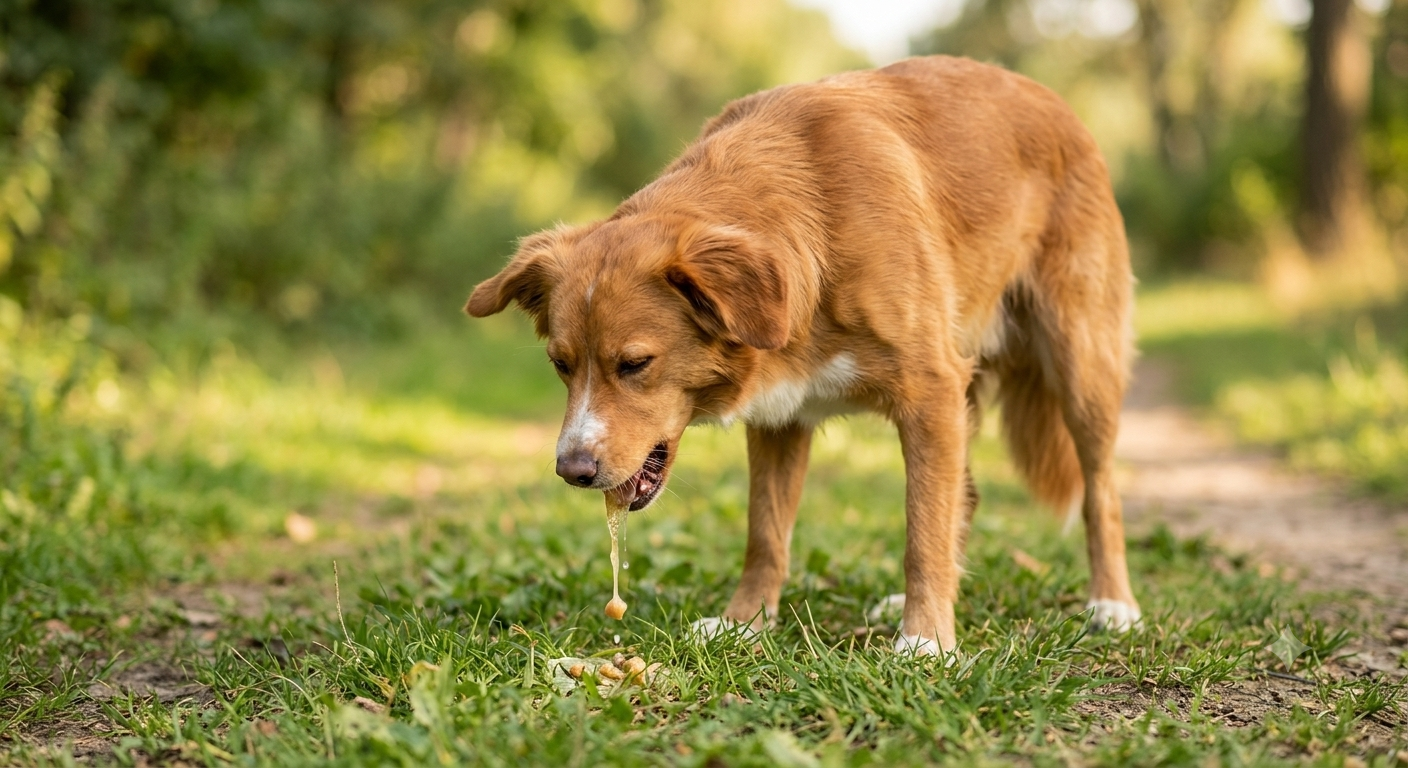
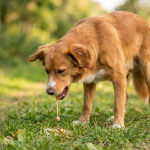
Seeing your dog throw up can be worrying, especially when you don’t know what caused it. Dogs can vomit for many different reasons. Sometimes it may be something minor, such as eating too quickly or getting into food they shouldn’t have. But in other cases, vomiting can be a sign of an illness or another health problem.
So, why is your dog throwing up? The answer isn’t always easy to figure out because several things can cause vomiting in dogs. What your dog ate, how often they are vomiting, and whether they have other symptoms can all help you understand what might be going on.
In this article, we’ll explain the most common causes of dog vomiting, what you can do to help your dog, and which warning signs you should never ignore. If you want to take good care of your dog and know when vomiting is something to worry about, keep reading because this guide can help you understand what your dog may be going through.
Common Reasons Why Your Dog Is Throwing Up
Veterinary sources ke mutabiq, dogs mein vomiting ki kai wajahen ho sakti hain, aur har vomiting ka matlab simple stomach upset nahi hota. Dr. Craig B. Webb, PhD, DVM, DACVIM, who is associated with Colorado State University’s Veterinary Teaching Hospital, explains that vomiting can be linked to digestive problems, pancreatitis, kidney or liver disease, nervous-system problems, or irritating substances and poisons.
1. Eating Something They Shouldn’t
Dogs commonly vomit after eating inappropriate things such as garbage, spoiled food, discarded food, wrappers, or other unusual items.
Dogs are naturally curious and often put things in their mouths that they shouldn’t. Eating something unusual can irritate the stomach and cause vomiting. In many mild cases, the problem may settle after a short time, but repeated vomiting or other symptoms should not be ignored.
2. Eating Too Quickly
VCA notes that eating too much food too quickly can contribute to vomiting and recommends smaller meals for pets with this problem.
Some dogs almost seem to inhale their food instead of eating it slowly. When a large amount of food reaches the stomach very quickly, it can cause discomfort and may make the dog vomit. Using smaller portions or a slow-feeder can sometimes help slow down eating.
3. A Sudden Change in Diet
VCA identifies a change in diet as a possible reason for vomiting and recommends making food changes gradually.
If you suddenly replace your dog’s usual food with a completely different one, their digestive system may not adjust well. The change can cause stomach upset, vomiting, or diarrhea. When introducing new food, gradually mixing it with the old food is generally easier on the digestive system.
4. Intestinal Parasite
Intestinal parasites can cause both vomiting and diarrhea in dogs, and veterinarians can test for parasites and provide appropriate treatment.
Worms and other intestinal parasites can irritate the digestive tract and make your dog feel sick. You may notice vomiting along with diarrhea, poor appetite, or changes in your dog’s normal behavior. Puppies can be especially vulnerable, so persistent symptoms deserve veterinary attention.
5. Stomach or Intestinal Infection
Merck Veterinary Manual explains that vomiting is often associated with inflammation of the stomach or intestines, which can result from infection or irritation.
An infection or inflammation in the digestive system can make your dog vomit because the stomach and intestines become irritated. Your dog may also develop diarrhea, lose their appetite, or seem less energetic than usual. If these symptoms continue or become severe, a veterinarian should determine the underlying cause.
6. Eating Something Toxic
Veterinary guidance lists poisons and irritating substances among possible causes of vomiting in dogs.
Dogs can accidentally swallow medications, chemicals, poisonous plants, or foods that are unsafe for them. Vomiting may be one of the first signs, but poisoning can become serious quickly. If you believe your dog has eaten something toxic, contact a veterinarian immediately rather than trying to make the dog vomit yourself.
7. Pancreatitis
Veterinary source says: Merck Veterinary Manual lists vomiting, loss of appetite, weakness, abdominal pain, dehydration, and diarrhea among common signs of severe pancreatitis in dogs.
Pancreatitis happens when the pancreas becomes inflamed and can make a dog quite unwell. A dog with pancreatitis may vomit repeatedly and may not want to eat or move normally. Because the condition can become serious, signs such as persistent vomiting and abdominal pain should be checked by a veterinarian.
8. Swallowing a Foreign Object
Veterinary sources identify swallowed objects as a possible cause of vomiting, particularly when an object becomes stuck and causes an intestinal blockage.
Dogs may swallow toys, pieces of plastic, socks, bones, or other objects while playing or exploring. If the object cannot pass through the digestive system, it can cause an obstruction. Repeated vomiting, abdominal discomfort, weakness, or loss of appetite can be warning signs that require prompt veterinary care.
9. Motion Sickness or Anxiety
Merck Veterinary Manual lists both anxiety and motion sickness among possible causes of acute vomiting in dogs.
Some dogs become nauseous when travelling in a car, especially if they are not used to it. Anxiety can also affect the digestive system and contribute to vomiting. If your dog only vomits during journeys or stressful situations, discuss the pattern with your veterinarian to determine the best way to manage it.
10. Kidney or Liver Problems
Merck Veterinary Manual explains that vomiting can occur with diseases affecting organs outside the digestive system, including kidney and liver disease.
This is one reason you should not assume that every case of vomiting is simply an upset stomach. Problems with organs such as the kidneys or liver can affect the whole body and lead to nausea and vomiting. If vomiting keeps returning or happens alongside weakness, weight loss, appetite changes, or other unusual symptoms, your dog should be examined by a veterinarian.
If you’re curious about other things your pet does when their stomach is upset, we’ve covered that too. Tap here to learn why is my dog eating grass or why is my cat eating grass and what these behaviors could mean for their health.
Is It Normal for My Dog to Throw Up?
It can be normal for a dog to throw up occasionally, especially if they have eaten too quickly, eaten something unusual, or have a mild stomach upset. A single episode of vomiting does not always mean that your dog is seriously ill. If your dog seems comfortable afterward, is drinking water, has normal energy, and goes back to eating normally, you may not need to panic right away.
However, you should pay attention to how often your dog is vomiting and how they behave afterward. Vomiting several times in a short period, continuing for more than a day, or happening regularly is more concerning. You should also look for other symptoms such as diarrhea, loss of appetite, unusual tiredness, abdominal pain, fever, or signs of dehydration. These symptoms can indicate that something more than a simple upset stomach may be going on.
The appearance of the vomit can also provide useful information. For example, blood in vomit, dark material that looks like coffee grounds, or the presence of a foreign object should not be ignored. In these situations, it is safer to contact a veterinarian rather than waiting to see if the problem goes away on its own.
So, the answer is that occasional vomiting can happen to otherwise healthy dogs, but repeated or severe vomiting is not something you should consider normal. If you are unsure about your dog’s condition, especially if your dog is very young, old, or already has another health problem, speaking with a veterinarian is the safest choice.
When Is Vomiting Not Normal for Your Dog?
Vomiting is not something you should consider normal when it keeps happening again and again or your dog does not return to their usual behavior afterward. If your dog vomits several times in a day, cannot keep water down, or refuses food, it could mean that the stomach problem is more serious than a simple upset stomach. Repeated vomiting can also lead to dehydration, which can make your dog weaker.
Pay close attention to other symptoms as well. Blood in the vomit, severe diarrhea, weakness, loss of appetite, abdominal pain, fever, or signs of dehydration are all reasons to take the situation seriously. Vomiting together with these symptoms can occur with conditions such as poisoning, intestinal blockage, pancreatitis, or other illnesses that require veterinary care.
You should also be especially careful if your dog keeps trying to vomit but nothing comes out, particularly if their belly looks swollen or they seem restless or uncomfortable. This can be a sign of a serious emergency. If your dog is showing severe symptoms, is getting worse, or you simply feel that something is not right, it is much safer to contact a veterinarian instead of waiting for the vomiting to stop on its own.
How to Handle Mild Vomiting at Home
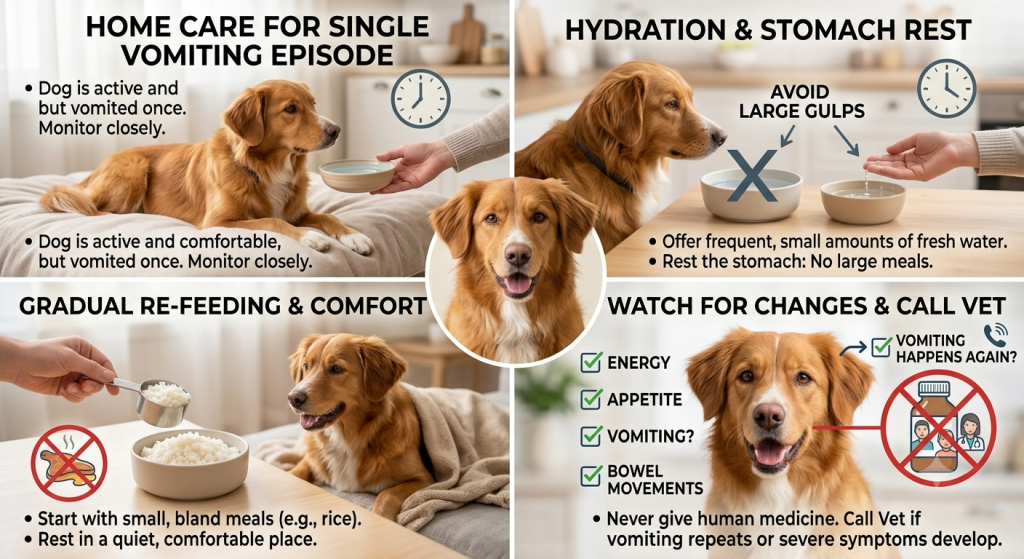
If your dog has vomited only once and is otherwise active, comfortable, and behaving normally, you can monitor them at home for the time being. The main goal is to give the stomach some time to settle while making sure your dog stays hydrated. Avoid giving a large meal or allowing your dog to drink a lot of water at once, as this may trigger more vomiting.
Here are some simple things you can do:
- Give small amounts of water: Offer fresh water frequently, but don’t let your dog gulp down a large amount at once.
- Give the stomach some rest: Avoid immediately giving a full meal after your dog vomits.
- Start with small meals: Once your dog is keeping water down and seems better, offer small portions of easily digestible food.
- Avoid fatty foods: Don’t give table scraps, greasy foods, rich treats, or unfamiliar foods while your dog is recovering.
- Keep your dog comfortable: Let them rest in a quiet place and avoid strenuous exercise until they feel better.
- Watch for changes: Keep an eye on their energy, appetite, drinking, bowel movements, and whether vomiting happens again.
- Never give human medicine: Medicines made for people can be dangerous for dogs unless a veterinarian has specifically recommended one.
A single mild episode may settle on its own, but you should not continue home care if your dog starts vomiting repeatedly or develops other concerning symptoms. If your dog cannot keep water down, becomes very weak, has blood in the vomit, develops severe abdominal pain, or seems to be getting worse, contact a veterinarian promptly.
What to Do If Your Dog’s Vomiting Is Not Normal
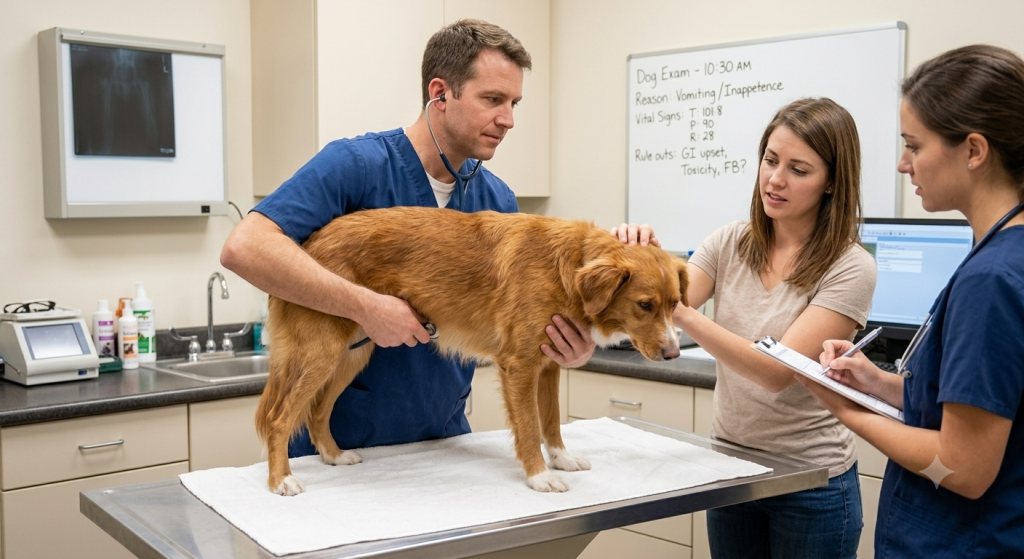
If your dog is vomiting repeatedly or showing other worrying symptoms, don’t try to handle the problem at home for too long. Repeated vomiting can sometimes point to an underlying illness, poisoning, an intestinal blockage, or another condition that needs proper veterinary care.
- Contact a veterinarian as soon as possible if vomiting keeps happening or your dog is becoming weak, painful, or unable to keep water down.
- Do not give human medicines or home remedies unless your veterinarian specifically tells you to, as some medicines can be harmful to dogs.
Before visiting the vet, try to remember how many times your dog vomited, when it started, what the vomit looked like, and whether your dog ate anything unusual. If possible, tell the veterinarian about any other symptoms, such as diarrhea, loss of appetite, weakness, or abdominal pain. This information can help them understand what may be causing the vomiting and decide what treatment or tests are needed.
If you suspect your dog has swallowed a poisonous substance or a foreign object, treat it as urgent and contact a veterinarian immediately rather than waiting for the symptoms to become worse.
Conclusion
So, why is your dog throwing up? As we’ve seen throughout this article, there isn’t always one simple answer. Your dog may throw up because they ate too quickly, swallowed something they shouldn’t have, changed their food suddenly, or are dealing with a digestive problem. In some cases, though, vomiting can be connected to something more serious, which is why it’s important not to ignore repeated or unusual vomiting.
The good thing is that now you know what to look for. If your dog vomits once and goes back to being their normal, happy self, you can keep a close eye on them and follow the basic home-care steps we discussed. But if the vomiting keeps happening, your dog seems weak or uncomfortable, refuses water or food, or you notice blood or other worrying symptoms, it’s time to take the situation more seriously and contact a veterinarian.
Remember, you know your dog better than anyone. If their behavior suddenly feels different or you simply feel that something isn’t right, don’t brush it off. A little attention at the right time can make a big difference. Your dog can’t tell you where it hurts or what they ate, so noticing these small changes is one of the best ways you can look after them.
Hopefully, this guide has helped you understand what may be behind your dog’s vomiting and what you should do next. Don’t panic over a single mild episode, but don’t ignore a pattern either. Keep an eye on your dog, trust what you’re seeing, and get veterinary help whenever the symptoms seem serious or continue to get worse.
Written by/ Haseeb Khan
Animal Lover | Sharing Simple Pet Care Knowledge for Every Pet Owner


Comments