
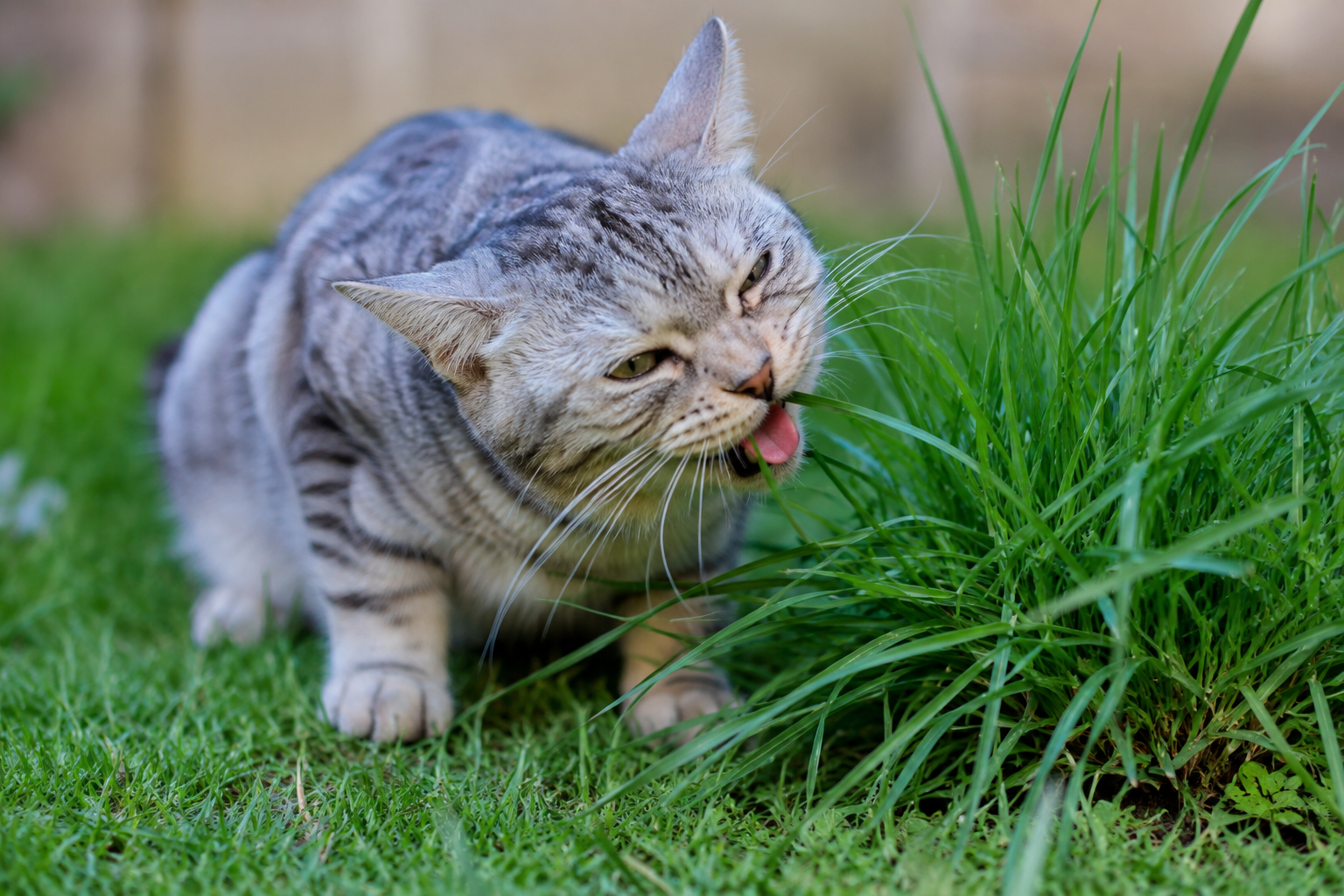
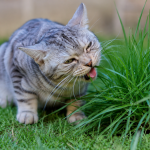
You might have seen your cat eating grass. I thought, “Why is my cat eating grass?” You are not the one who has wondered this. A lot of people who own cats are surprised when they see their cat eating grass because cats do not usually eat things that’re not meat.
Cats are animals that need to eat meat to survive. A lot of cats eat grass anyway no matter if they live inside or outside.
People who know a lot about cats think that cats eat grass for a reason. Some cats do this to help their stomach work better or to get rid of hairballs. They just like the way grass tastes and feels. Usually when cats eat grass it is not a problem. They are not sick. But if your cat eats a lot of grass, throws up a lot or does other things that are not normal it might mean that your cat has a health problem that needs to be checked by a veterinarian.
In this article you will learn why cats eat grass, if it is safe for your cat to eat grass, what good things might come from eating grass and what bad things might. When you should worry about your cat eating grass.
Is It Normal for Cats to Eat Grass?
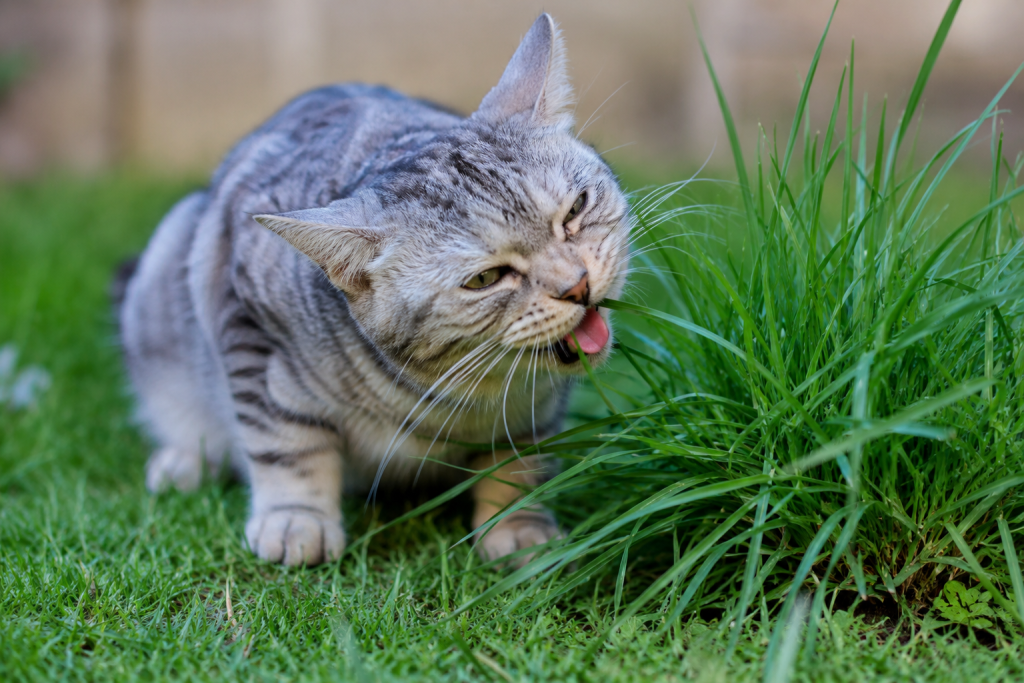
Cats eat grass. This is something that lots of cats do. Cats need to eat meat to stay healthy.. Cats are animals that need meat in their diet because that is what cats are meant to eat.
Of course, the act of eating grass by the cats does qualify as one that is quite acceptable to many cats. As obligate carnivores, the cats usually obtain a major portion of their nutritional requirements through a meat-based diet; nonetheless, there have been incidences whereby the cats chew on grass whether indoors or outdoors.
According to the American Veterinary Medical Association and veterinarians, eating some grass from time to time will not be a problem if your kitty continues to stay healthy and active and eats normally her usual food. Some experts think that cats eat grass because it can help them in their digestion, help them to expel hair balls, or just because cats like how this grass tastes. Whatever the reason for this habit of eating grass is, one thing is clear – it is normal for healthy cats.
However, grass eating may not necessarily be natural for cats. If your cat tends to eat too much grass and then vomits, fails to eat adequately, is underweight, lazy, or suffering from stomach pain or diarrhea, it could be because of certain health complications. Some diseases such as stomach problems, parasitism, malnutrition, or anything else may cause cats to continuously eat grass.
However, if your cat eats grass occasionally and behaves normally after doing so, you do not need to have much concern about this issue. However, if it is done regularly along with certain health problems, it is better to take your cat to a veterinarian.
Pet Care Advice: Should you decide to feed your cat some grass, make sure to get grass that is safe for your cat to eat like wheatgrass, oat grass, or barley grass. Don’t give your cat grass that has been sprayed with any form of chemical.
Why Do Cats Eat Grass? (Main Reasons)
If you’ve ever wondered, “Why is my cat eating grass?”, the truth is that there isn’t just one answer. Cats may eat grass for several different reasons, and veterinarians are still researching this natural behavior. In many cases, eating grass is completely harmless and may even provide certain benefits. Here are the most common reasons why cats nibble on grass.
1. To Help with Digestion
One of the most widely accepted theories is that grass may help support a cat’s digestive system. The fiber found in grass can help food move through the digestive tract more easily, especially in cats that occasionally experience mild constipation.
2. To Pass Hairballs More Easily
Cats spend a large part of their day grooming themselves, which means they swallow loose fur. Over time, this fur can collect in the stomach and form hairballs. Some veterinarians believe that eating grass may help cats move hairballs through the digestive system or bring them up more easily.
3. Because of Natural Instinct
Even wild cats have been observed chewing on grass and plants from time to time. This suggests that grass eating is an instinctive behavior that has been passed down through generations. Domestic cats may continue this habit even when they have a balanced diet and live indoors.
4. They Like the Taste or Texture
Sometimes the explanation is surprisingly simple—your cat may just enjoy chewing on fresh grass. Young, soft blades of grass can be appealing because of their smell, texture, or taste. Just like cats enjoy playing with leaves or plants, they may also enjoy nibbling on grass occasionally.
5. To Get Extra Fiber
Grass contains natural fiber, which may help support healthy digestion and regular bowel movements. Although cats don’t need grass to meet their nutritional requirements, a small amount of fiber can benefit some cats.
6. To Trigger Vomiting Occasionally
Some cats vomit after eating grass, leading many owners to believe they eat it on purpose to upset their stomach. However, research suggests that this doesn’t happen in every case. According to veterinary experts, only a small percentage of cats vomit immediately after eating grass, so vomiting is likely a side effect rather than the main reason they eat it.
Quick Summary
The most common reasons cats eat grass include:
- Supporting healthy digestion.
- Helping move or remove hairballs.
- Following a natural instinct inherited from wild cats.
- Enjoying the taste or texture of fresh grass.
- Getting a small amount of natural fiber.
- Occasionally triggering vomiting to clear stomach contents.
Veterinary Insight: According to veterinarians and the American Veterinary Medical Association (AVMA), occasional grass eating is usually considered normal in healthy cats. However, if your cat suddenly starts eating large amounts of grass, vomits frequently, refuses food, loses weight, or seems unwell, it’s important to consult your veterinarian to rule out any underlying health condition.
Is Eating Grass Safe for Cats?
Yes, for the majority of cats. Consumption of a small quantity of clean, pesticide-free grass is not harmful to healthy cats. Many cats graze on grass regularly, yet never suffer from any negative effects of such actions. If the cat munches on a bit of grass from time to time but keeps eating, drinking, playing and acting in the same manner, then you do not have to be worried about that.
But not all grass is good for cats. The grass which has been sprayed with pesticides, herbicides, fertilizers, or some other substances used in lawn care is very harmful to cats and can cause various health disorders. There are also some plants growing outdoors which resemble grass and can be poisonous to cats.
Though grass by itself is not dangerous to your pet’s health, eating large quantities of it can lead to digestive upset for your cat. Some cats may even vomit after ingesting grass, but there are those who simply experience digestive disturbances after eating it. However, if such instances happen rarely, then they are usually seen as perfectly normal behavior.
In the opinion of veterinarians and according to the American Veterinary Medical Association, eating small quantities of grass is a natural process in the life of cats who are healthy. It is important to consider the overall condition of your cat rather than just focus on the grass eating issue.
When Should You Be Concerned?
There are certain instances when it may indicate that your pet has a health problem.
Contact Your Veterinarian If Your Cat:
- Grasses in very large quantities.
- Constantly vomits after eating the grasses.
- Is unwilling to take its normal diet.
- Has diarrhea or constant constipation.
- Loss of weight without any particular cause.
- Is lethargic or inactive.
- Indicates abdominal pain or uneasiness.
- Also eats other non-food materials such as plastic, papers or cloth, together with grass.
These symptoms can indicate any of the following: gastrointestinal disorder, parasite infection, poor nutrition or some other illness.
Veterinary Guidance
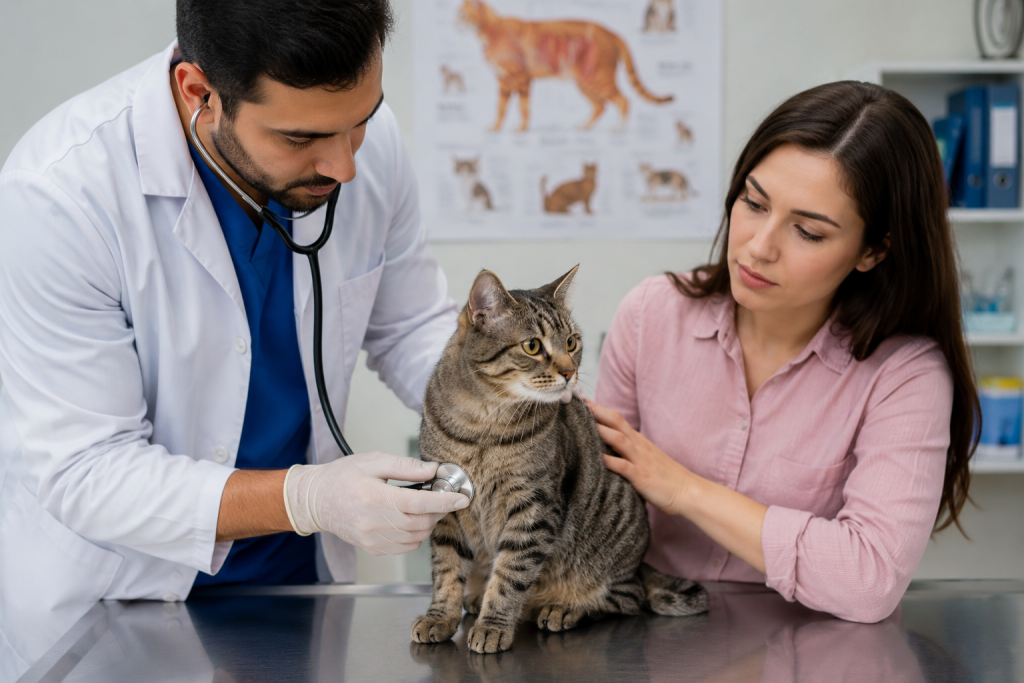
Should your feline indulge in grass consumption but rarely and without exhibiting any irregularities after the incident, then there is no need for alarm. But should this activity persist or occur alongside other such behaviors like vomiting, loss of weight, appetite loss, and anything else abnormal, book a visit to your veterinarian to ensure that the problem is detected early on.
Keep in mind: Consuming grass alone is usually harmless. What poses a potential danger is when it occurs along with something else.
How to Keep Your Cat Safe
Keeping your cat safe doesn’t mean stopping it from eating grass completely. Instead, focus on making sure the grass and your cat’s environment are safe. A few simple precautions can help prevent health problems while allowing your cat to follow its natural instincts.
Tips to Keep Your Cat Safe
Make sure that you feed your cat only grass which is not dangerous for it like wheat grass, oat grass or barley grass.
It is extremely important that your cat doesn’t consume any grass which is grown under the influence of any pesticides, herbicides or fertilizers.
Keep dangerous for your cat plants both at home and in the garden.
- Provide your pet with a balanced diet.
- Brush your cat to decrease hairballs in its stomach.
- Your cat should always have access to fresh clean water.
- Pay attention to possible vomiting and diarrhea after your cat has eaten some grass.
- Arrange regular visits to the veterinarian for your pet.
- If you know that your cat likes eating grass, then you should arrange a pot of cat grass inside your house for it.
🔗 Related Reading: If you’re interested in understanding similar behavior in dogs, don’t miss our guide on “Why Do Dogs Eat Grass?“ It explains why dogs chew grass, whether it’s normal, and when you should be concerned. If you want to care your pets then follow our website (anilover.com)
By following these simple safety tips and paying attention to any unusual changes in your cat’s behavior, you can help keep your feline friend healthy, happy, and safe.
Conclusion
It is quite amusing to watch your cat munching on some grass, but it should not raise any red flag. The reasons why your cat is eating grass could be because of digestion, elimination of hairball, instinct, or simply that your cat likes eating it. When your cat is well and the grass it is eating is not poisonous, there is nothing to worry about.
But when your cat munches on much grass and vomits, as well as lack of appetite, it is wise to see a vet. If you observe anything unusual in your cat’s activities, you can be sure to spot any future problems.
Good care will make sure that your cat lives happily ever after.
Written by/ Haseeb Khan
Animal Lover | Sharing Simple Pet Care Knowledge for Every Pet Owner




Comments